

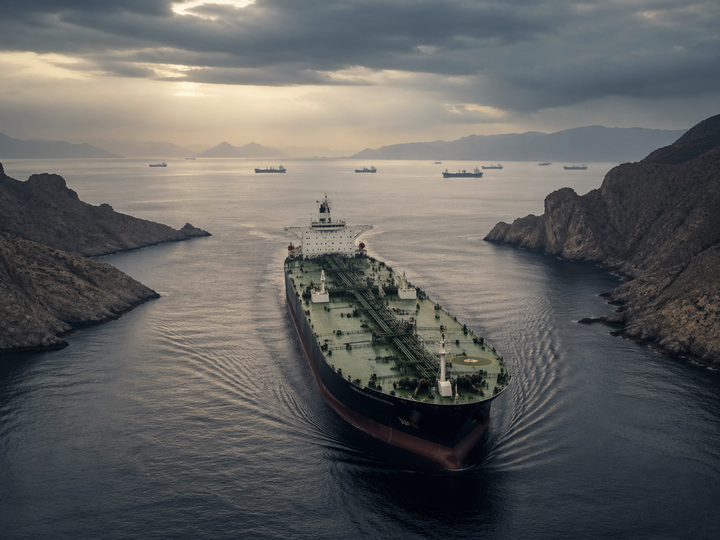
An actual article by Farhad Khakzad argues that the Strait of Hormuz is not merely a narrow maritime route for oil shipments, but a strategic fault line where energy security, military power, financial stability, and geopolitical order intersect. The central claim is that Iran does not need to close the Strait completely in order to trigger global consequences. It is enough for Tehran to make the vulnerability of the Strait appear credible and persistent, thereby creating uncertainty that affects markets, political decision-making, and the broader international system.
A key point of the article is the connection between maritime security and the dominance of the US dollar. According to the author, the dollar's role in global oil trade is not based solely on liquidity or the depth of American capital markets, but also on the United States' long-standing ability to guarantee the security of global trade routes. If this protective function loses credibility, the result would not likely be an immediate collapse of dollar dominance, but rather a gradual erosion of the strategic and monetary order that underpins it.
Khakzad interprets Iran's strategy as a form of asymmetric leverage. The objective is not necessarily to halt shipping altogether, but to raise the costs of order-maintenance for the United States and its allies. Higher insurance premiums, greater war-risk costs, longer transit times, and more cautious behaviour by banks, insurers, and states could slowly weaken confidence in the existing system. In this context, alternative settlement mechanisms, reserve diversification, and non-dollar arrangements become more attractive, especially for actors such as China.
The article further argues that no globally effective risk management framework currently exists to address this challenge. A credible response would have to combine military deterrence with energy strategy, crisis diplomacy, insurance structures, and currency policy. Instead, current international responses are described as fragmented, reactive, and focused mainly on short-term escalation control.
In conclusion, the article presents the Strait of Hormuz as a test case for the resilience of the Western-led international order. What is at stake is not only the security of oil flows, but also the credibility of a system that has long depended on the linkage between military protection, monetary predominance, and geopolitical influence. Without a more coherent and comprehensive response, this vulnerability will remain a major strategic weakness of the present era.