


The pandemic, trade restrictions and geopolitical conflict have revived an old lesson: global supply chains are efficient, but they are also vulnerable. The most consequential weaknesses are chokepoints – economically important products, production locations, sectors or transport routes for which substitutes are limited or cannot be activated quickly. BIS Bulletin No 138 shows that disruptions at such nodes are associated with larger output losses and stronger price pressures than comparable disruptions elsewhere in the production network.
The analysis therefore shifts attention away from the simple question of whether a supply chain is disrupted toward three more useful questions: How central is the affected node? How quickly can firms substitute? And which buffers – inventories, spare capacity or margins – are available? The interaction of these factors largely determines whether a disruption remains local or becomes macroeconomic.
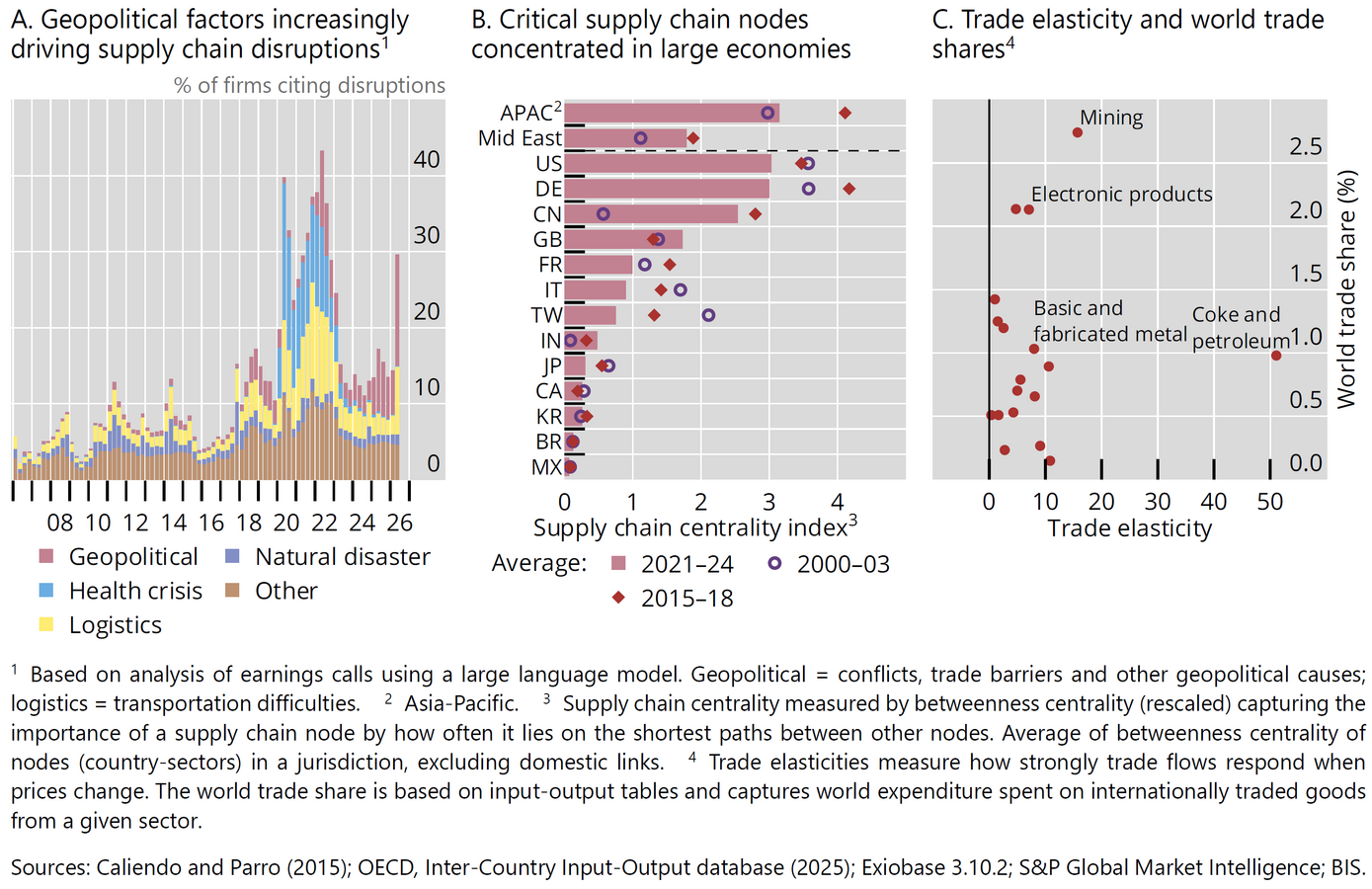 Fig. 01: Rising supply chain disruptions bring chokepoints into focus. [Source: Ibrahim Alshehri / Ryan Banerjee / Michael Chui / Anna Maddux / Ko Munakata / Fabrizio Zampolli (2026): Chokepoint disruptions and their macroeconomic consequences, BIS Bulletin No 138, Graph 1, p. 2]
Not all nodes are equally important
A chokepoint emerges when economic importance meets limited short-run substitutability. The study captures importance partly through betweenness centrality: a node is more central when it lies on many of the shortest production paths linking other nodes in the global network. High centrality is concentrated in large economies and manufacturing sectors, including German machinery, Chinese electrical machinery and fertiliser production in the Middle East.
Centrality, however, is only one part of vulnerability. Mining and energy products have large trade shares but can sometimes be sourced from alternative suppliers relatively easily. Electronics, including semiconductors, are both economically important and harder to replace. Moreover, the export concentration of intermediate inputs has increased over the past three decades, raising exposure to a smaller number of countries and processing hubs.
Chokepoint shocks hit output and prices harder
The empirical results are economically meaningful. A one-standard-deviation increase in disruptions at key country-sector nodes is associated with a decline in global industrial production growth that is about 50% larger than for an equally sized disruption at less critical nodes. Within one year, disruptions at key nodes also raise downstream producer prices by roughly 70 basis points, while less central disruptions have only limited price effects.
The mechanism is intuitive: a central bottleneck does not affect only its direct buyer. It can propagate across multiple production paths and sectors at once. The network position of an input therefore becomes a macroeconomic risk factor in its own right.
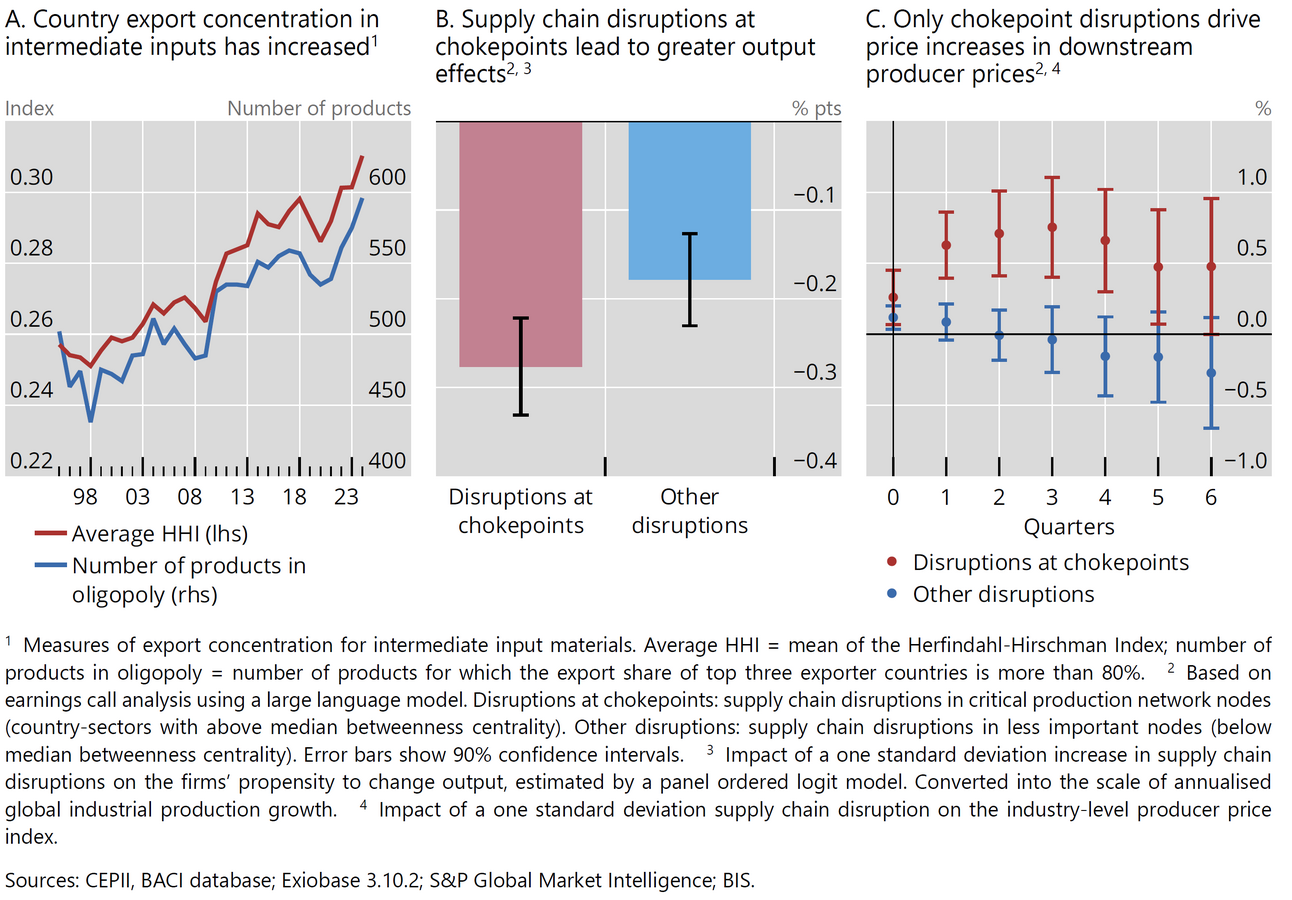 Fig. 02: Rising concentration and macroeconomic effects of disruptions at chokepoints. [Source: Alshehri et al. (2026), BIS Bulletin No 138, Graph 2, p. 3]
Substitution protects quantities – but not prices
The main private-sector adjustment mechanism is substitution. Firms facing geopolitical disruptions are more likely to seek alternative suppliers, use different inputs or reallocate production. Following export restrictions, lost imports from the restricting country are often largely offset by greater imports of the same product from elsewhere. This protects output, but does not necessarily prevent a price shock.
Japan's experience with rare earths illustrates the trade-off. Between 2012 and 2014, the share of rare-earth imports sourced from China fell from around 80% to about 45%, yet alternative purchases were substantially more expensive. Resilience therefore comes at a cost: firms can avoid quantity losses by paying more for substitute inputs, shifting part of the shock from output to prices.
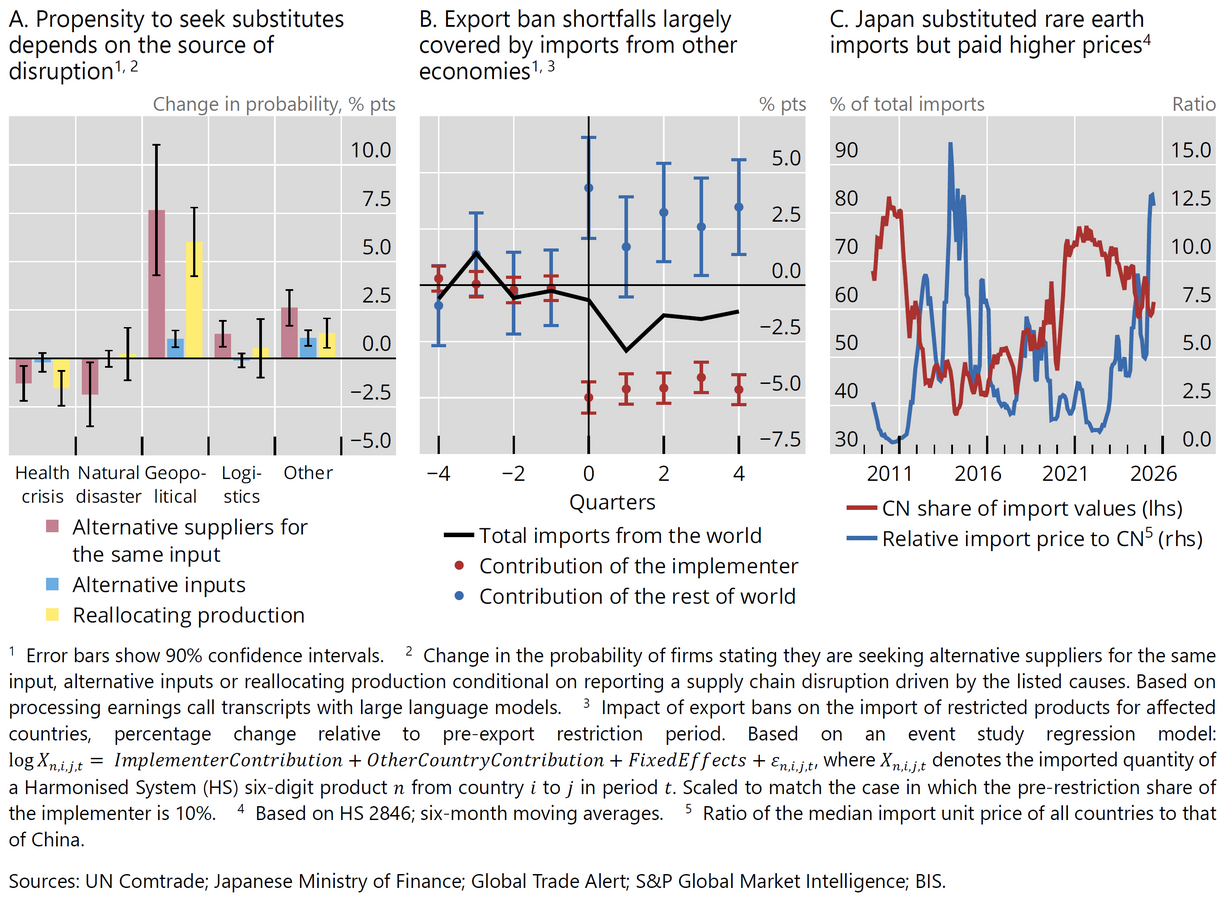 Fig. 03: Substitution is significant after geopolitical disruptions, but input prices rise. [Source: Alshehri et al. (2026), BIS Bulletin No 138, Graph 3, p. 4]
Time is a critical risk factor
Substitution is much more difficult in the short run than in the long run. This time dimension explains why chokepoint shocks can initially be severe even when alternatives exist eventually. In the study's simulations, a 150% global increase in trade costs for high-tech electronics produces short-run GDP losses of around 1% in most economies and as much as 4% in highly exposed countries. In the long run, the losses are far smaller – averaging around 0.3% and reaching at most about 1% in the most exposed economies.
For risk management, the key question is therefore not only whether a substitute exists, but when it can be activated. New suppliers, technical qualification, production redesign and additional capacity take time. A component that is replaceable over several years may still be a critical short-term chokepoint.
Inventories as insurance against supply chain risk
Inventories buy time. They allow firms to bridge temporary shortages while alternative suppliers or production routes are developed. The study's analysis of the Strait of Hormuz shows that high commercial oil inventories can dampen the price impact of traffic disruptions. Conversely, depleted inventories raise the risk of sharper and potentially non-linear price effects.
The global inventory-to-sales ratio has also trended upward, suggesting that firms have invested in greater resilience after successive supply shocks. Yet resilience is not free. Higher interest rates increase the carrying cost of inventories, forcing firms to balance working-capital efficiency against robustness.
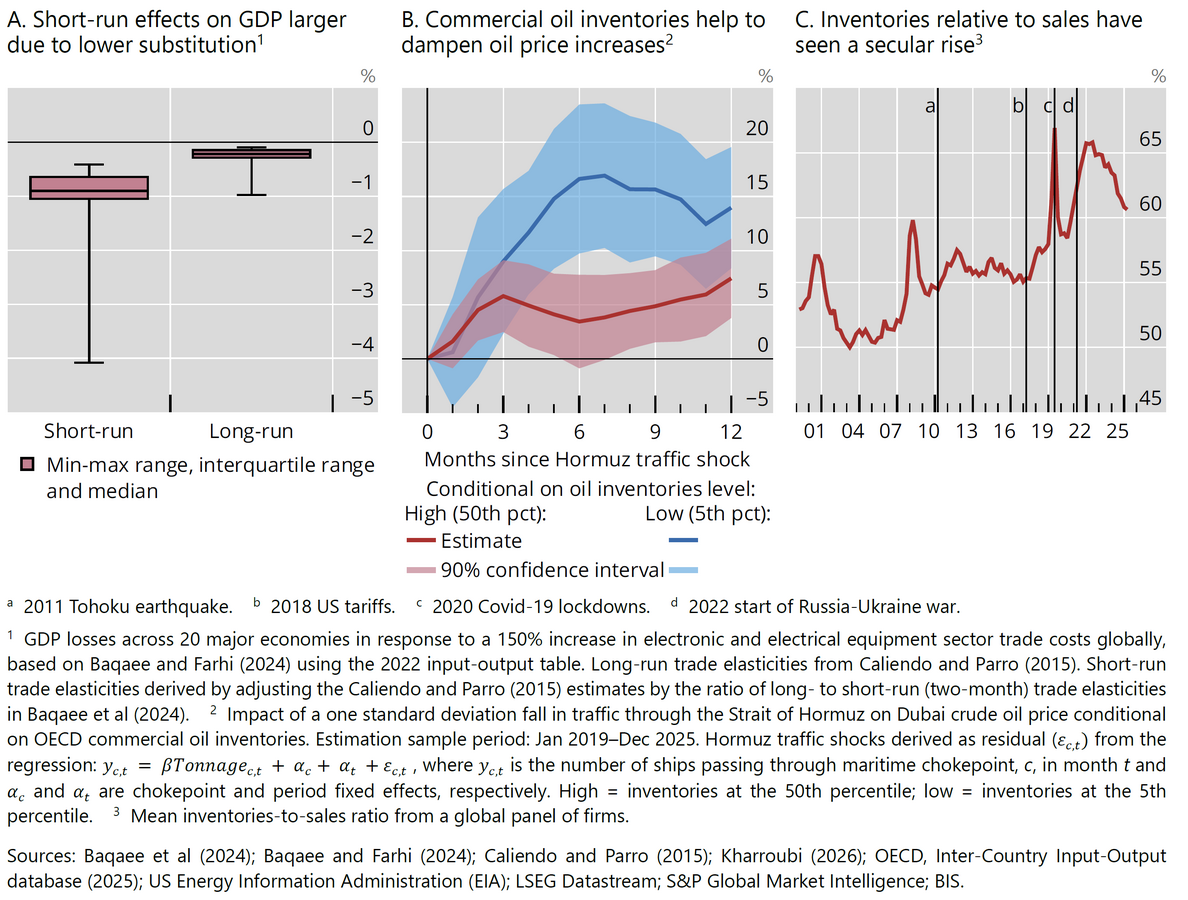 Fig. 04: Substitution and inventories mitigate the effects of chokepoint shocks. [Source: Alshehri et al. (2026), BIS Bulletin No 138, Graph 4, p. 5]
Implications for economic policy
The standard monetary-policy prescription for supply shocks remains valid: policymakers should generally look through first-round inflation effects as long as expectations remain anchored and second-round effects are limited. Chokepoints complicate this calibration because their effects can be larger, more persistent and potentially non-linear.
The centrality and upstream position of the disrupted node, the availability of substitutes, inventory buffers, spare capacity, margins and demand conditions all matter. Low buffers can turn cost increases into broader pricing cascades. At the same time, overly tight policy can make it more difficult to finance inventories, new suppliers and additional capacity, slowing the repair of the supply side.
The authors therefore point to a differentiated policy mix. Targeted fiscal measures such as credit guarantees may support supply repair without strongly stimulating aggregate demand. Broad price subsidies can be counterproductive when they weaken incentives to substitute. Clear communication is also essential to distinguish unavoidable relative-price adjustment from persistent, generalised inflation.
Summary and outlook
The BIS analysis shows that supply chain risk cannot be understood from trade volumes or geographic concentration alone. Network structure matters. Disruptions at highly central nodes generate larger output losses and greater price pressure. Substitution, inventories and margins can cushion the shock, but they often shift costs elsewhere or work only temporarily.
For firms, this implies that supplier risk management should incorporate a network and chokepoint perspective. A supply base may appear diversified while several suppliers still depend on the same upstream producer, port, processor or critical material. For policymakers, the challenge is to identify critical nodes early, assess buffers realistically and calibrate the trade-off between price stability and supply repair.
The outlook is mixed. Geopolitical fragmentation and export restrictions make further chokepoint shocks more likely, while firms are simultaneously investing in diversification, inventories and alternative production routes. The decisive question is therefore not whether supply chains can be made disruption-free, but how much adaptability they contain – and how quickly that adaptability can be mobilised when a critical node fails.
Key findings of the study "Chokepoint disruptions and their macroeconomic consequences"
→ Geopolitical tensions, trade restrictions and conflicts are increasing exposure to critical supply-chain chokepoints.
→ Disruptions at central country-sector nodes are associated with about 50% larger declines in global industrial production growth than comparable disruptions at less critical nodes.
→ Within one year, chokepoint disruptions raise downstream producer prices by roughly 70 basis points, while other disruptions have little price impact.
→ Substitution mitigates quantity losses but often raises input prices.
→ Short-run GDP effects are much larger than long-run effects because technological and organisational substitution takes time.
→ Inventories provide an important buffer, but become more expensive to carry when interest rates are high.
→ Policy responses should reflect the cause and centrality of the disruption, substitutability, buffers and demand conditions.
→ Broad price subsidies may weaken adjustment incentives, while targeted support for supply repair can be more effective.